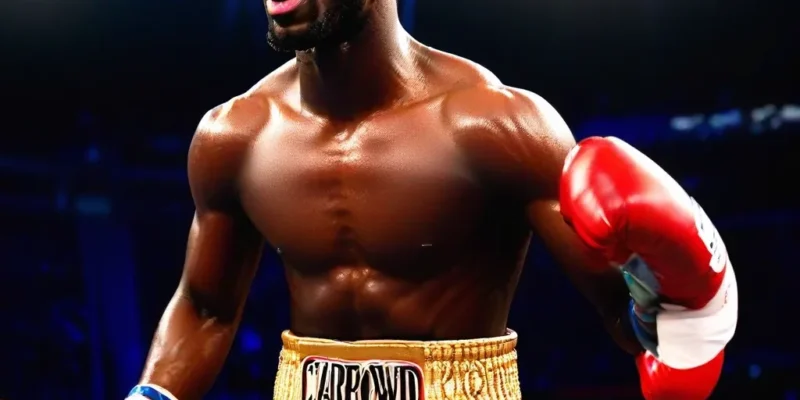
Terence “Bud” Crawford. The name echoes through boxing arenas, synonymous with power, precision, and an almost unsettling calm under pressure. Fresh off a dominant victory, the debate rages on: is Crawford not just a champion, but the champion? The undisputed welterweight king has etched his name in boxing history, but in the subjective realm of pound-for-pound (P4P) rankings, opinions clash like heavyweights in the center of the ring.
This isn’t just about wins and losses. It’s about dominance, skill, and the almost unquantifiable “it” factor that separates legends from mere contenders. This article throws itself into the heart of the discussion, analyzing Crawford’s career, his accomplishments, and the rivals he’s faced to determine, as objectively as possible, if he truly deserves the pound-for-pound crown. Put your gloves on because defining greatness is never a straightforward fight.
Understanding the Pound-for-Pound Concept
The term “pound-for-pound” (P4P) in boxing represents a hypothetical, and often debated, ranking system that attempts to equalize the playing field across different weight classes. It seeks to answer the question: “Who is the best boxer, regardless of their size?” In essence, it imagines how fighters would fare if they were all the same weight.
Unlike standard rankings within a specific weight division, pound-for-pound lists are inherently subjective. There’s no definitive formula or universally agreed-upon method for determining the rankings. Instead, boxing experts, media outlets, and fans rely on a combination of performance-based evaluations and more abstract considerations.
Several key criteria commonly influence pound-for-pound rankings. Skills is paramount such as boxing technique, footwork, defense, and offensive capabilities. The level of Dominance shown within their respective weight class, including knockout ratios, decisive wins, and overall control in fights is considered. The Quality of Opposition faced and defeated is also a major factor. Beating top-rated contenders and former champions carries significant weight. Career Achievements, such as title reigns, unification bouts, and historical significance contribute to a fighter’s standing. Finally, Longevity, sustained excellence over a long period, is valued, demonstrating consistent performance and adaptability.
Because these criteria are open to interpretation, subjectivity inevitably plays a role. Personal biases, promotional affiliations, and recency bias (overemphasizing recent performances) can all influence rankings. Therefore, pound-for-pound lists should be viewed as discussion points rather than definitive statements of absolute superiority.
Crawford’s Career Highlights and Achievements
Early Career and Rise to Prominence
Terence Crawford’s journey to boxing stardom began long before the bright lights of world championship fights. His early career was marked by dedication and a relentless pursuit of excellence. Before turning professional, Crawford honed his skills in the amateur boxing circuit, building a solid foundation of technique and ring generalship. The transition to the professional ranks was a significant step, and like many aspiring champions, Crawford faced initial challenges. These early bouts were crucial in shaping his fighting style and building the mental fortitude that would define his later career. His professional debut marked the beginning of a climb, with each fight serving as a valuable learning experience, solidifying his reputation as a boxer to watch.
Analyzing Crawford’s Skills and Style
Terence Crawford’s dominance in the boxing world stems from a multifaceted skillset that blends technical prowess with innate adaptability. His boxing technique is a constantly evolving puzzle for opponents to solve, making him one of the most dangerous fighters in the sport.
Crawford’s Boxing Technique
One of the defining features of the Crawford style is his ambidextrous ability. He seamlessly transitions between orthodox and southpaw stances, disrupting his opponent’s rhythm and opening up new angles of attack. This switch-hitting isn’t merely a gimmick; Crawford generates significant power from both stances, keeping defenders guessing. His punching power is undeniable, with a high knockout ratio that speaks for itself. He possesses a crisp jab, a lightning-fast right hand (from orthodox) or left (from southpaw), and a devastating uppercut.
However, Crawford is more than just power. His defense is subtly brilliant, relying on precise footwork, head movement, and a high guard to evade punches. He doesn’t waste energy with excessive movement but instead utilizes subtle adjustments to maintain optimal positioning. This defensive responsibility allows him to conserve energy and capitalize on his opponent’s mistakes.
Adaptability and Ring IQ
Crawford’s true genius lies in his adaptability and ring IQ. He’s not locked into a single style, but instead, tailors his approach based on his opponent’s strengths and weaknesses. During a fight, he constantly analyzes his adversary, identifying vulnerabilities and exploiting them with calculated precision. For example, in his fight against a particularly aggressive opponent, Crawford might initially concede ground, luring them into a false sense of security before unleashing a counter-offensive. Conversely, against a more passive fighter, he will proactively dictate the pace and pressure. This adaptability is evident throughout his career, making him incredibly difficult to prepare for.
Examples from Specific Fights
Consider his match against Viktor Postol. Postol, a skilled boxer with a significant height and reach advantage, attempted to control the distance and utilize his jab. Crawford, however, quickly adapted, closing the gap and turning the fight into a phone booth battle where his superior inside fighting skills prevailed. This is just one example of how Crawford’s adaptability and ring IQ make him a formidable force in the squared circle.
Crawford’s Key Fights and Performances
Terence Crawford’s ascent to pound-for-pound king wasn’t built on hype alone; it was forged in the crucible of high-stakes matchups against formidable opponents. Several performances stand out as definitive proof of his extraordinary talent and unwavering resolve. These fights weren’t just wins; they were masterclasses in adaptability, power, and ring generalship, solidifying his place among boxing’s elite.
Errol Spence Jr.: A Defining Moment
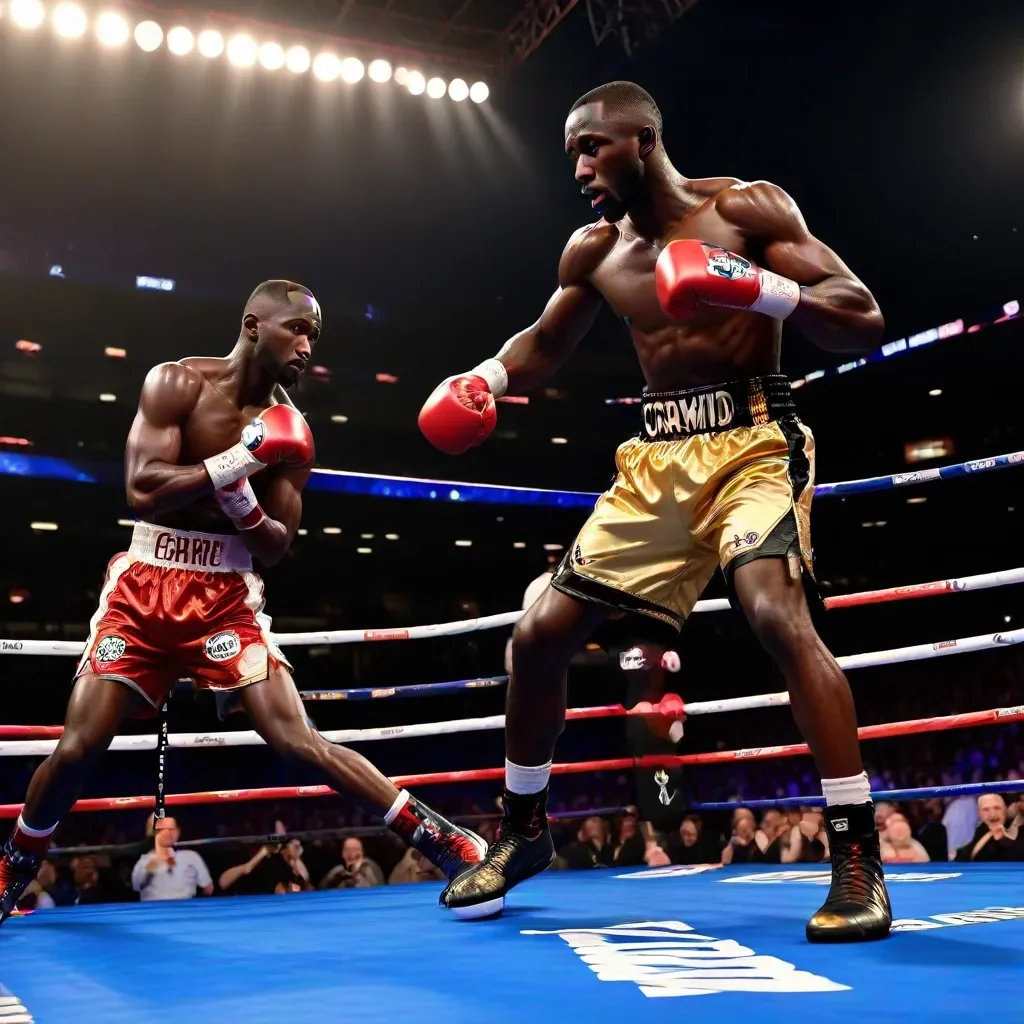
The showdown with Errol Spence Jr. was more than just a title unification bout; it was a clash of undefeated titans, a battle for welterweight supremacy, and Crawford’s ultimate audition for pound-for-pound greatness. Spence, a highly respected and feared fighter, entered the ring with many believing his size and power would pose significant problems for Crawford. The pre-fight narrative was split, with some analysts questioning whether Crawford could handle Spence’s relentless pressure. However, from the opening bell, Crawford dictated the pace and controlled the distance, showcasing his superior footwork and ring IQ.
Crawford’s jab was a weapon of precision, consistently finding its mark and disrupting Spence’s rhythm. As the fight progressed, Crawford’s power became increasingly evident, with knockdowns in multiple rounds highlighting his ability to hurt and finish his opponent. He dissected Spence, exposing vulnerabilities few knew existed. Crawford’s dominance was so comprehensive that the fight was stopped in the ninth round, a testament to his overwhelming superiority. This victory wasn’t just a win; it was a statement. It underscored Crawford’s adaptability, his power, and his undeniable claim to being the best fighter on the planet. As one analyst noted after the fight, “Crawford didn’t just beat Spence; he dismantled him, revealing a level of skill and precision rarely seen in boxing.”
Further Demonstrations of Dominance
While the Spence victory undoubtedly cemented his P4P status, Crawford’s earlier performances also highlighted his exceptional talent. These wins, built on speed, power, and an uncanny ability to adapt mid-fight, showcased the comprehensive skillset that makes him such a difficult opponent for anyone in the world.
Crawford’s Place Among the Greats
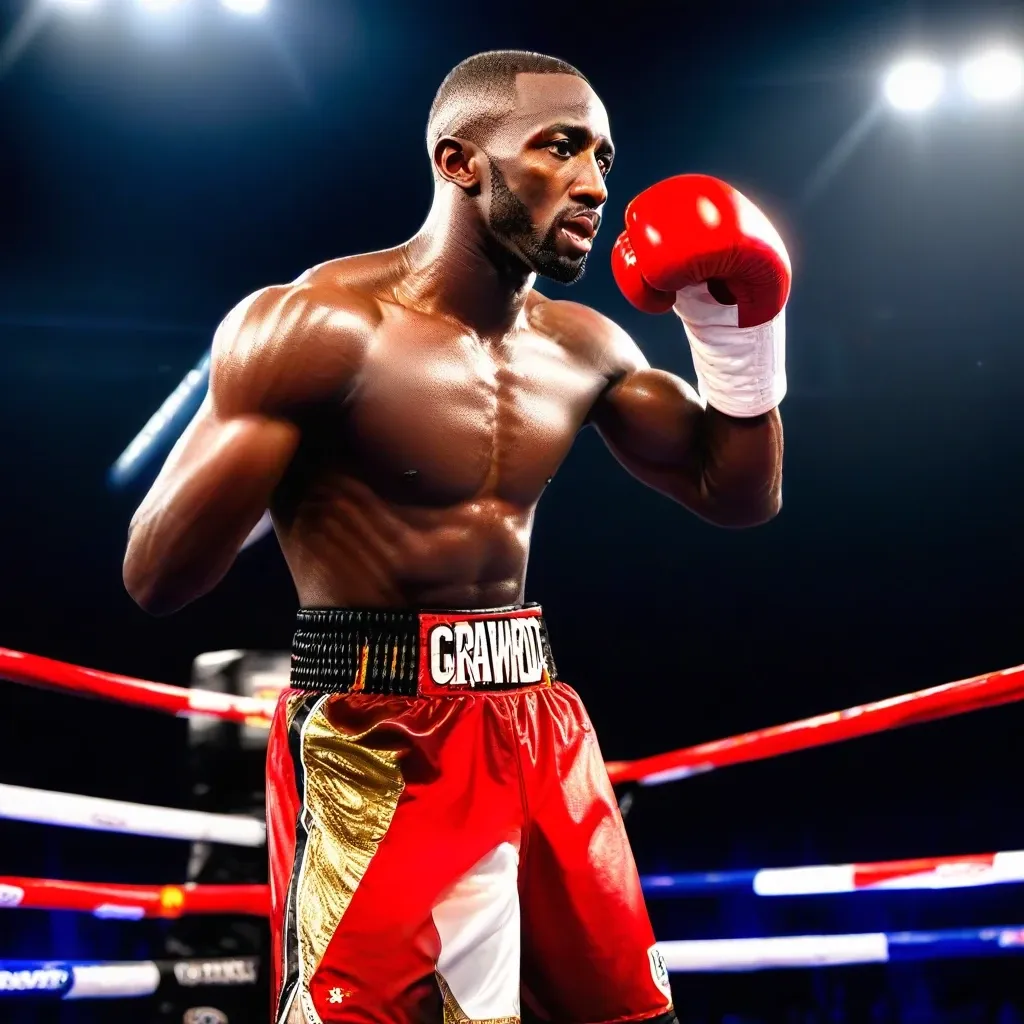
The pantheon of boxing legends is a crowded yet exclusive space, reserved for those fighters who transcend mere victory and etch their names into history. To discuss Terence Crawford’s legacy is to inevitably place him in comparison to these titans, sparking debates about his rightful position among the greatest to ever lace up a pair of gloves.
Comparing eras is a tricky business, but certain objective metrics offer a starting point. Crawford’s title reigns across multiple weight classes place him in esteemed company. Yet, statistics alone fail to capture the full picture. Consider Sugar Ray Robinson, often hailed as the greatest, whose dominance in the welterweight and middleweight divisions was unparalleled, or Muhammad Ali, whose impact extended far beyond the ring, solidifying his status as a cultural icon. These legends cast long shadows.
Arguments for Crawford’s inclusion center on his undeniable skill and adaptability. His switch-hitting prowess, his knockout power, and his ring IQ are all hallmarks of a truly special fighter. The eye test reveals a fighter who can dissect opponents and impose his will, a trait shared by the all-time greats. His remarkable record speaks volumes of his capabilities and impact in the sport.
However, skeptics point to the perceived lack of truly dominant opponents faced throughout his career. While Crawford has consistently defeated the fighters put in front of him, some argue that he hasn’t faced the same level of adversity as some of his legendary predecessors. Ultimately, the question of whether Crawford belongs among the absolute elite remains a subjective one. But as his career continues to unfold, Crawford is actively writing his own chapter in boxing history, one that demands consideration and respect in any conversation about the greatest boxers of all time.
The Future of Crawford’s Career
Terence Crawford’s dominant victory has fans and analysts alike buzzing about what’s next for the newly crowned champion. The possibilities seem boundless, but the path forward is laden with potential challenges. One name consistently thrown into the mix is Canelo Alvarez. A clash between Crawford and Canelo would undoubtedly be a monumental event, pitting two of boxing’s biggest stars against each other.
However, the size disparity presents a significant hurdle. Crawford would need to move up significantly in weight, while Canelo would need to come down, creating questions about their ability to agree on a weight class. Other potential opponents include emerging talents and seasoned veterans eager to test their skills against Crawford’s elite abilities. These fights offer Crawford the chance to further cement his legacy while providing a platform for rising stars to prove themselves.
Challenges also extend beyond specific opponents. Navigating promotional complexities, securing lucrative deals, and maintaining peak physical condition will be crucial for Crawford’s continued success. Despite these roadblocks, the opportunities are immense. Each victory further solidifies his place in boxing history and enhances his claim as the sport’s pound-for-pound king. Fans can anticipate Crawford remaining a dominant force, actively seeking out the biggest challenges and continuing to deliver captivating performances in the years to come.